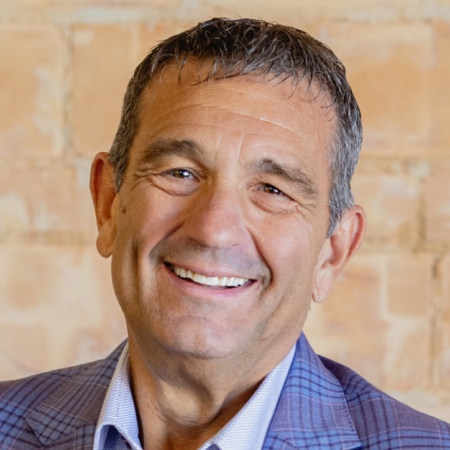
By Verl Workman
Real estate agents often struggle in a tough market because they treat changing conditions as barriers instead of adapting their strategies, skills, and actions. Successful agents recognize that transactions are still happening and adjust to the market rather than waiting for the market to adjust to them.
In every changing real estate market, some agents continue to grow their business while others struggle. The difference is often less about interest rates or inventory and more about how they respond to changing conditions.
The first group studies reality. The second group creates excuses.
Unfortunately, the second group is usually larger.
Spend five minutes in almost any real estate office and you’ll hear the same complaints:
“Nobody’s buying.” “Nobody’s selling.” “Inventory is terrible.” “Rates have killed the market.”
The interesting thing is that none of those statements are actually true. They’re emotional interpretations masquerading as facts.
If nobody was buying, there would be no closings. If nobody was selling, there would be no new listings. If rates had killed the market, transactions would have stopped entirely.
Yet homes continue to sell every single day.
Families continue to relocate. People continue to get married, divorced, retire, inherit property, have children, lose jobs, gain jobs, and make life decisions that require housing.
The market didn’t stop. It just changed. Those are not the same thing.
So how should real estate agents respond to a changing market? They must adjust their expectations and strategies. Transactions continue to happen, but success requires adapting to new conditions instead of relying on past market dynamics.
What many agents call a market problem is actually an adaptation problem. For years, the industry benefited from conditions that covered weaknesses.
Lead follow-up didn’t have to be great. Pricing strategy didn’t have to be sophisticated. Communication didn’t have to be exceptional. Demand was doing much of the heavy lifting.
A rising tide creates a lot of artificial confidence. Then the tide goes out. And suddenly everyone discovers who was swimming without skill.
Difficult markets don’t create weakness. They expose it.
That’s why two agents can work in the same city, under the same interest rates, facing the same inventory challenges, and produce dramatically different results.
One sees obstacles. The other sees conditions.
One complains. The other adjusts.
One waits. The other works.
One studies headlines. The other studies opportunities.
The difference isn’t the market. It’s in their interpretation.
The most dangerous thing an agent can do is confuse a challenge with an impossibility.
How does mindset affect a real estate agent’s success? Once you decide something can’t be done, your behavior starts aligning with that belief.
You make fewer calls. Have fewer conversations. Present fewer solutions. Create fewer opportunities.
Then you point to the results as proof you were right all along. The story becomes self-fulfilling.
What I find most fascinating is that many agents who claim business is impossible are making that declaration while competitors in the same ZIP code are having career years.
Same market. Same inventory. Same rates.
Different mindset. Different behavior. Different outcome.
The market is not your biggest obstacle. The story you’re telling yourself about the market is.
And until you challenge that story, no amount of lead generation, technology, coaching, or training is going to fix what is fundamentally a belief problem.
The agents who dominate the next decade won’t be the ones waiting for market conditions to improve. They’ll be the ones who adapt their skills, actions, and mindset to today’s real estate market instead of using changing conditions as an excuse.
Frequently Asked Questions
1. Why do some real estate agents succeed while others struggle in the same market?
Success comes from how agents respond to market conditions. Agents who adapt their strategies, improve their skills, and focus on opportunities often produce stronger results than those who view the market as an obstacle.
2. Has the real estate market stopped because of higher interest rates?
No. Homes continue to sell every day because people still relocate, marry, divorce, retire, inherit property, grow their families, change jobs, and make other life decisions that require buying or selling a home. The market has changed, but it has not stopped.
3. Why do difficult real estate markets expose weaknesses?
When demand is high, weaknesses in lead follow-up, pricing strategy, and client communication can be less noticeable. More challenging markets reveal where agents need stronger skills because success depends more on execution than favorable conditions.
4. How does mindset affect a real estate agent’s performance?
Beliefs influence behavior. Agents who believe success is impossible tend to make fewer calls, have fewer conversations, present fewer solutions, and create fewer opportunities. Those actions often reinforce the original belief through lower results.
5. What is the biggest obstacle for many real estate agents during a difficult market?
The biggest obstacle is often the story agents tell themselves about the market. Viewing challenges as impossible can limit action, while seeing them as conditions that require adaptation encourages productive behavior.
6. What will distinguish successful real estate agents in the future?
Agents who consistently adapt, focus on opportunities, and refuse to use market conditions as an excuse will be better positioned to succeed than those who wait for the market to improve.
Let’s Get Started!
The blog post above references the prevailing wisdom of our Workman Success Systems coaches to help their clients achieve the business they want and the life they deserve. Do you believe having the right coach might be able to help you get there? If the answer is yes, don’t wait. Click the link below, take our 2-minute assessment, and start your journey toward success today. I promise you’ll walk away with actionable ideas, whether you join our coaching program or not.
Take our 2-minute Find My Fit assessment to get started!