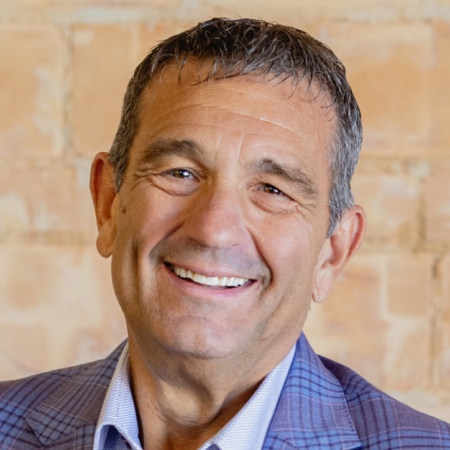
By Verl Workman
Real estate team growth reduces profitability when headcount expands faster than operational capacity.
I’ve watched teams add agents, increase volume, expand marketing, and still quietly lose control of the business underneath them. Revenue grew. But complexity grew faster.
Eventually the pressure catches up.
That’s what a number of leaders are experiencing right now. Not because opportunity disappeared, but because the operational demands of modern real estate changed faster than most organizations adapted.
In my experience, the market eventually exposes every weak structure.
A business can survive inefficiency during aggressive growth cycles. It becomes much harder when margins tighten, consumers expect immediate responsiveness, and top producers begin evaluating organizations based on infrastructure instead of personality.
That shift is changing everything.
For years, teams were built around a simple formula: recruit more agents, buy more leads, and push harder. The problem is that the model created businesses heavily dependent on constant energy. Every operational gap required human intervention. Every inconsistency required management attention. Every bottleneck eventually landed on the leader’s desk.
That isn’t scale. That’s accumulated chaos disguised as momentum.
The strongest organizations today are moving in the opposite direction. They’re simplifying operations while improving execution. They’re becoming more intentional about role clarity, compensation, technology integration, and workflow consistency.
Most importantly, they’re building businesses that don’t collapse every time the leader steps away.
Over the years, I’ve learned that healthy companies reduce friction relentlessly. They remove unnecessary decision-making. They standardize repetitive tasks. They create systems that allow people to perform consistently without constant supervision.
That’s where leadership starts becoming leverage.
One of the biggest mistakes leaders make is assuming profitability is the byproduct of growth. It isn’t. Profitability is usually the byproduct of structure.
Operational structure includes clearly defined roles, documented workflows, standardized processes, integrated technology, performance accountability, and systems that allow the business to operate consistently without depending on constant leader intervention.
The market is full of high-volume organizations carrying fragile economics because they scaled production without redesigning operations. They added more people to broken systems instead of fixing the systems themselves.
Eventually that creates exhaustion.
Leaders become trapped managing inefficiency instead of building vision. Recruiting becomes harder because strong talent recognizes operational instability quickly. Retention weakens because top performers eventually seek environments with better support and less friction.
The businesses pulling ahead today understand something critical: modern agents want leverage, not just commission splits.
They want systems that make them faster. They want operational support that protects their time. They want organizations that help them perform at a higher level without adding more noise.
That expectation is forcing leaders to rethink traditional team models entirely.
Technology is accelerating the transition. AI and automation are removing repetitive operational burdens that consumed teams for years. But the leaders benefiting most from these tools are not simply adopting software. They’re redesigning workflows around efficiency itself.
For real estate teams, AI is most valuable when it automates repetitive administrative work, supports consistent workflows, and frees leaders and agents to focus on client relationships and strategic decision-making.
That’s a completely different mindset.
In my years of coaching, I’ve seen technology fail repeatedly inside organizations lacking operational clarity. Tools don’t solve confusion. They amplify it. But when strong systems already exist, technology becomes a multiplier.
The conversation shouldn’t be about replacing people. It should be about removing waste.
The future belongs to organizations capable of combining high human trust with highly efficient infrastructure.
That balance matters because consumers still choose relationships. They still want confidence, communication, and leadership throughout the transaction process. What changes is the expectation around speed and consistency. Clients increasingly expect seamless experiences regardless of market conditions or transaction complexity.
Businesses that deliver that consistently will continue taking market share.
What’s interesting is that many of the healthiest teams right now are becoming operationally calmer even while they grow. They’re not relying on panic-driven leadership anymore. They’re creating environments where accountability, communication, and execution become predictable.
That changes culture dramatically.
People perform better inside stable systems. Leaders think more clearly. Strategic planning improves because the organization stops consuming all available emotional energy.
This is why the next generation of industry leaders will likely look different from the last one. They’ll still understand sales. They’ll still understand relationships. But they’ll also think like operators.
They’ll understand that sustainable growth requires intentional architecture. Not endless hustle.
And the leaders who recognize that shift early will build organizations capable of surviving far longer than the market cycle itself.
Frequently Asked Questions
1. Why isn’t adding more agents always the best way to grow a real estate team?
Adding more agents can increase revenue, but it also increases operational complexity. Without strong systems, leaders spend more time managing inefficiencies, creating bottlenecks, and solving daily problems instead of building the business.
2. What makes a real estate team scalable?
A scalable team is built on clear roles, standardized workflows, consistent execution, integrated technology, and systems that allow the business to operate effectively without constant involvement from the leader.
3. How should real estate leaders use AI and automation?
AI and automation are most effective when they support well-designed operational systems. Technology should eliminate repetitive work and improve efficiency, but it cannot solve unclear processes or organizational confusion.
4. Why do top-producing agents value operational support?
High-performing agents want systems that help them work more efficiently, protect their time, and create consistent client experiences. Strong operational support provides leverage that allows them to perform at a higher level with less friction.
5. What is the connection between profitability and organizational structure?
Profitability comes from having a well-designed operational structure rather than simply increasing production. Organizations that improve systems before expanding are better positioned to maintain healthy margins and sustainable growth.
6. What characteristics define the next generation of successful real estate leaders?
Successful leaders will combine sales and relationship skills with operational thinking. They will build organizations around intentional systems, efficient workflows, accountability, and long-term sustainability rather than relying on constant hustle.
Let’s Get Started!
The blog post above references advice used by our coaches to help their clients achieve the business they want and the life they deserve. Do you believe having the right coach might be able to help you get there? If the answer is yes, don’t wait. Click the link below, take our 2-minute assessment, and start your journey toward success today. I promise you’ll walk away with actionable ideas, whether you join our coaching program or not.
Take our 2-minute Find My Fit assessment to get started!